Made in SF with ❤️


Last updated: February 2026
TL;DR: Moving to San Francisco is expensive, chaotic, and one of the best decisions you might ever make. The cost of living is roughly 89% above the national average, expect to pay $3,000-$3,400/month for a 1-bedroom apartment, and the apartment hunt will test your patience. But the trade-offs — mild year-round weather, unbelievable nature access, world-class food, a walkable and bikeable city — are genuinely worth it. Below, I cover everything I wish someone had told me before I packed up and moved here.
Let me start with a confession: when I first moved to San Francisco, I didn’t love it.
I know, I know. That’s not the kind of thing you expect to read on a website called Ask Me SF. But it’s the truth, and I think it’s important to lead with that because if you’re about to uproot your life and move across the country (or across the world), you deserve honesty, not a highlight reel.
I moved here from New York for my husband’s job. I didn’t choose San Francisco — it kind of chose me. And for the first several months, I spent a lot of time comparing everything to NYC. The restaurants closed too early. The nightlife was… calm. Where was the energy? The grit? The 2 AM slice of pizza on every corner?
But I told myself I’d give it a real chance. And somewhere along the way — maybe it was the first time I biked across the Golden Gate Bridge in January wearing just a light jacket, or the morning I discovered a tiny bakery in the Sunset that made the best croissant I’d ever had, or the afternoon I drove 20 minutes to a trailhead and suddenly I was alone in a redwood forest — somewhere in there, San Francisco stopped being “the place I moved to” and became home.
I genuinely love it here now. And if you’re thinking about making the move, here’s everything I’ve learned.
How Much Does It Actually Cost to Live in San Francisco?
Let’s rip off the bandaid. San Francisco is expensive. Like, really expensive. The cost of living here is approximately 89% above the national average as of 2026, and housing is the single biggest factor. If you’re coming from anywhere other than Manhattan or certain parts of the Bay Area, you will experience sticker shock. That’s just the reality.
Here’s what the numbers actually look like right now:
Rent in San Francisco (2026)
- Studio: $2,300–$2,900/month
- 1-Bedroom: $3,000–$3,400/month
- 2-Bedroom: $3,700–$4,800/month
Those ranges depend on the neighborhood, the building, and honestly how much natural light you’re willing to live without. (A common SF trade-off: you can have a great location OR a sunny apartment, but both? That’ll cost you.)
Monthly Cost of Living Breakdown
Here’s a rough budget for a single person living in SF:
- Rent (1-bedroom): ~$3,000–$3,400
- Groceries: ~$400–$500 (17-19% higher than the national average)
- Transportation: ~$86–$104 for a Muni monthly pass, plus occasional rideshare
- Utilities, internet, phone: ~$200–$300
- Dining out, entertainment, coffee addiction: Variable (but let’s be honest, not small)
- Rough total for a single person: ~$4,680/month
- Rough total for a family of 4: ~$10,300/month
I know those numbers look scary. And they are! But here’s the thing nobody mentions in the “San Francisco is so expensive” conversation: the salaries here are also significantly higher than most of the country, and the city offers some incredible free perks that offset costs in surprising ways. More on that in a bit.
For a deeper look at what life in SF actually looks like — the good, the bad, and the $8 lattes — check out my article on things nobody tells you about San Francisco.
Where Should I Live in San Francisco?
This is the million-dollar question (sometimes literally, given the real estate prices). I wrote a whole in-depth guide on where to live in San Francisco, plus a comprehensive breakdown of the best neighborhoods in SF, so I’ll give you the highlights here and let you deep-dive there.
The short version: where you should live depends on your age, lifestyle, budget, and what you care about most. Here’s my honest take:
- In your 20s and want a social scene: The Mission or the Marina. The Mission has the best food and nightlife in the city, period. The Marina is more polished and close to the waterfront — great if you’re into running, brunch culture, and flat streets. Both are pricey but packed with other young transplants, so you’ll find your people fast.
- Starting a family or want more space: Noe Valley is the classic choice — stroller-friendly, great schools, charming village feel. It’s not cheap, but it’s one of the few neighborhoods that actually feels designed for families. Glen Park is a quieter, slightly more affordable neighbor.
- Want quieter, more affordable living: Look at the western and southern neighborhoods — the Outer Sunset, the Excelsior, West Portal, Ingleside. These areas get less hype but offer significantly lower rents, bigger apartments, and a genuinely neighborhood-y feel. I wrote about 21 places off Ocean Avenue that give you a taste of what that part of the city offers.
- Commuting to the East Bay: If your job is in Oakland, Berkeley, or anywhere along the BART line, living near a BART station is non-negotiable. The Mission (16th or 24th Street stations), Glen Park, and Balboa Park are solid choices. Trust me, you do not want to add a bus transfer onto a BART commute.
My biggest piece of advice? Don’t just look at neighborhoods online — actually visit them. Walk around on a Saturday morning. Eat lunch there. See how it feels. San Francisco neighborhoods have wildly different vibes, and the one that looks perfect on paper might not match your energy at all. And the scrappy neighborhood you almost overlooked? That might be the one.
How Do I Find an Apartment in San Francisco?
Okay, buckle up. Apartment hunting in SF is not for the faint of heart. It’s fast, competitive, and occasionally absurd. But it’s doable if you go in with the right strategy.
Where to Look
- Craigslist — Yes, really. I know it feels like 2008, but Craigslist is still the king of SF apartment listings. Most private landlords (and the city has a lot of them) post here first. Filter by neighborhood, set your budget, and check it obsessively. New listings go fast.
- Facebook Marketplace and local housing groups — Especially useful for finding rooms in shared apartments or sublets. There are several SF-specific housing groups on Facebook — search for things like “SF Housing” or “Bay Area Rentals.”
- Word of mouth — This is surprisingly effective here. Tell everyone you know (and everyone you meet) that you’re looking. SF is a big small town, and a lot of the best apartments never even make it to a listing because someone knew someone.
- Apartment listing sites — Zillow, Apartments.com, Zumper, and Trulia all work for bigger buildings and property management companies. Useful but less dominant than Craigslist for the real gems.
Tips for Surviving the Hunt
- Speed is everything. A good listing in SF can get hundreds of responses within hours. When you see something you like, respond immediately. Have your introduction, income verification, and references ready to go in a template.
- Have your finances in order. Most landlords want first month’s rent plus a security deposit (which can be up to 2x rent). That means you might need $6,000–$10,000 upfront. Have proof of income or an offer letter ready.
- Strong references matter. A good reference from a previous landlord can be the difference between getting the apartment and losing it to another applicant. If you don’t have a rental history (maybe you owned, or you’re moving out of your parents’ place), a personal or professional reference can help.
- Be flexible on timing. The SF rental market tends to have more inventory in late fall and winter, when fewer people are looking. If you can time your move for November through February, you’ll have less competition and sometimes lower prices.
- Don’t sign anything without seeing it in person. Scams exist. If a listing seems too good to be true or the landlord is weirdly eager to sign you sight-unseen, proceed with caution.
I won’t pretend the process is fun. My first apartment hunt here involved visiting 11 places in a single weekend, losing out on 3 of them to faster applicants, and eventually getting a place because the landlord liked that I mentioned I was quiet. (Apparently “I go to bed early” is a selling point in San Francisco. Which tracks.)
Do I Need a Car in San Francisco?
The short answer: no. The longer answer: it depends on your lifestyle, but you can absolutely live a full and happy life here without one.
San Francisco is one of the most walkable and bikeable cities in the country. Between Muni (the city’s bus and light rail system), BART (the regional train that connects to the airport and East Bay), rideshare apps, and Waymo (yes, the self-driving cars — they’re everywhere and they’re actually great), you can get pretty much anywhere without a car.
A monthly Muni pass costs $86–$104 depending on the type. Compare that to the full cost of owning a car in SF — insurance, gas, and the absolute nightmare of parking — and the math is pretty clear. Garage parking alone can easily run $300–$400/month, and street parking is a contact sport that will test your patience and your relationship with your fellow humans.
That said, there is one area where having a car really shines: nature access. One of the best things about San Francisco is that you’re less than an hour from Muir Woods, Stinson Beach, Half Moon Bay, wine country, and dozens of incredible hiking trails. You can do some of these trips by transit, but a car makes it dramatically easier.
My suggestion? Skip the car for your first year. Settle in, learn the city, figure out the transit system, and see how you actually live here. After a year, you’ll know whether a car would genuinely improve your life or just be an expensive headache. I know plenty of people who went both ways on this — there’s no wrong answer, but there’s definitely a wrong time to decide, and that’s before you’ve lived here.
What’s the Weather Really Like?
I have a whole article on what SF weather is actually like and another on what to wear in San Francisco, so I’ll keep this brief. But as someone who moved from a city with actual seasons, here’s what you need to know:
San Francisco has mild, temperate weather year-round. And honestly? This is one of the things that converted me from reluctant transplant to genuine fan. The average temperature ranges from the mid-40s to low 70s throughout the year. You will almost never deal with brutal heat, oppressive humidity, or snow. It doesn’t really get below freezing, and it doesn’t really get above 80°F (except for a handful of glorious days in September and October).
The trade-off is that summer — specifically June through August — is fog season. Mark Twain (probably) said the coldest winter he ever spent was a summer in San Francisco, and while the quote is almost certainly misattributed, the sentiment is accurate. “Real” summer happens in September and October, when the fog backs off and the city is sunny and warm.
For someone who bikes and spends a lot of time outdoors, the mild weather is honestly one of the single biggest quality-of-life upgrades of living here. I can ride my bike comfortably almost every day of the year. Coming from the Northeast, where half the year is too cold and the other half is too hot, that feels like a genuine luxury.
How Do I Meet People in San Francisco?
This is the question nobody asks out loud but everyone worries about. Moving to a new city as an adult is hard. Moving to a new city where you don’t know anyone is even harder. I get it — I’ve been there.
The good news: San Francisco is a city of transplants. A huge percentage of the people who live here moved from somewhere else, which means everyone understands the “I’m new and I don’t have friends yet” phase. There’s no stigma about it. In fact, people are generally pretty open to meeting new people because they remember what it was like.
Here’s what’s actually worked for me and for people I know:
- Hinge BFF — Yes, the dating app has a friend-finding mode, and it’s surprisingly effective in SF. The concept felt awkward to me at first, but several of my close friends here started as Hinge BFF matches. No shame.
- The Board Walks SF — This is a walking group that organizes regular walks around the city. It’s free, it’s social, and it’s a genuinely great way to explore neighborhoods while meeting people. I’ve heard nothing but good things.
- Activity-based groups — SF has a strong culture of group runs, bike rides, hiking clubs, and sports leagues. If you have a hobby, there’s almost certainly a group for it. Check Meetup, Reddit (r/sanfrancisco and r/AskSF are both active and helpful), or just search Instagram.
- Your neighborhood — SF is weirdly small-town-ish for a city. If you frequent the same coffee shop or bar, you’ll start recognizing faces pretty quickly. Don’t be afraid to strike up a conversation. People here are friendly.
- The NYC-to-SF pipeline — If you’re moving from New York (and statistically, a lot of you are), you’ll be surprised by how many other NYC transplants are here. It’s practically a subculture. You will bond over missing good pizza and having strong opinions about bagels.
The biggest mindset shift: in New York, social life often revolves around going out — bars, restaurants, nightlife. In San Francisco, social life revolves more around doing things — hiking, biking, farmers’ markets, beach bonfires, park hangs. Once I adjusted to that, making friends got a lot easier.
What About the Free Perks?
One of the most underrated things about living in San Francisco is how much free stuff is available. I’m not just talking about free concerts in the park (though there are plenty of those). The city has some genuinely meaningful freebies that offset the high cost of living.
- City College of San Francisco is free for SF residents. Yes, free. Tuition-free community college. Whether you want to take a ceramics class, learn a new language, or get a degree, it won’t cost you tuition. This is one of those things that blew my mind when I found out.
- Free museum days. Most major museums — de Young, SF MOMA, the Legion of Honor, the California Academy of Sciences — have free or discounted days for residents throughout the year.
- Stern Grove Festival. Every summer, this free outdoor concert series brings incredible artists to a beautiful natural amphitheater in the Sunset District. It’s one of my favorite things about living here.
- Golden Gate Park. 1,017 acres of gardens, trails, museums, and — yes — bison, completely free to wander. It’s bigger than Central Park and arguably more beautiful. (I said what I said.)
- Public libraries. SF’s library system is excellent, and your library card gets you free access to tons of digital resources, museum passes, and more.
I keep a running list of things to do around the city that includes a lot of free options. When people tell me SF is too expensive to enjoy, I respectfully push back — you just have to know where to look.
What Will Surprise Me About Living Here?
Every transplant has their list of surprises. Here’s mine (and the ones I hear most often from other newcomers):
The Hills Are No Joke
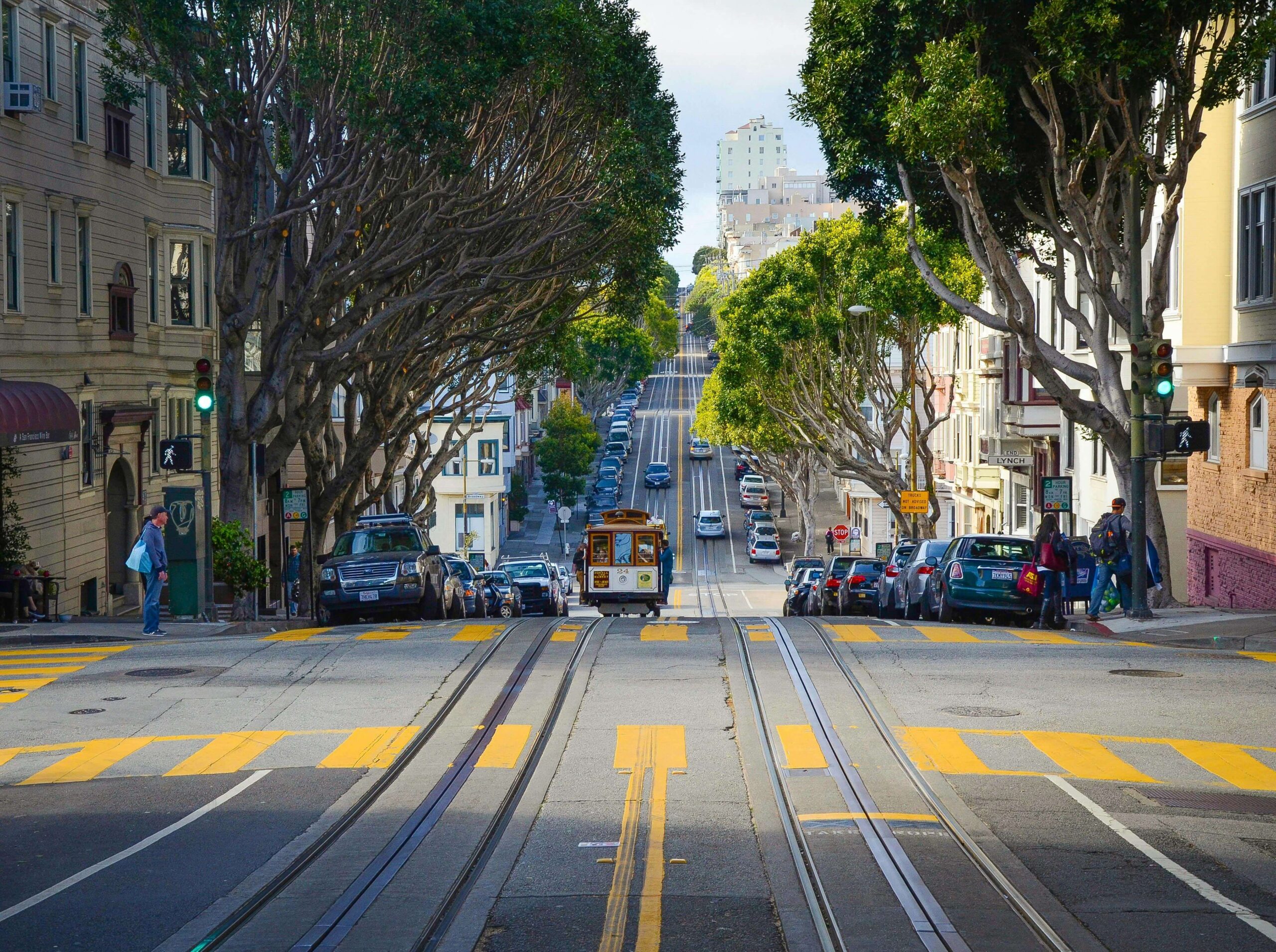
You think you’re ready for the hills. You are not ready for the hills. San Francisco has 43 named hills, and some of them are genuinely steep enough to make you question your life choices while walking up them. The first time I walked from the Castro to Twin Peaks, I genuinely thought I might not make it. My calves have never been the same (in a good way, honestly). If you’re apartment hunting, pay attention to hill proximity — living at the top of a steep hill is charming in theory and a cardiovascular event in practice, especially when you’re carrying groceries.
It’s Not New York (and That’s Okay)
This is the one I want to say directly to every NYC transplant, because it took me a while to learn it: San Francisco is not New York. It’s not trying to be New York. And it shouldn’t be.
Yes, the restaurants close earlier. Yes, the energy is more laid-back. Yes, you might find yourself on a Saturday night at home by 10 PM and perfectly happy about it. That’s not a failure of the city — that’s a different pace of life, and once you stop comparing, you might find you actually prefer it. I did.
New York and San Francisco are both extraordinary cities. They’re just extraordinary in completely different ways. New York is energy, density, ambition, and the thrill of a city that never stops. San Francisco is beauty, nature, community, and the quiet pleasure of a city that actually wants you to slow down. Both are lovely. They’re just not the same, and expecting one to be the other is a recipe for disappointment.
The Laid-Back Vibe Is Real
People in San Francisco are genuinely more relaxed than what I was used to in New York. Conversations are slower. Plans are looser. Nobody is in a rush to get anywhere (except maybe the people sprinting to catch the N-Judah, which is relatable). At first, I found this frustrating. Now I find it deeply refreshing. There’s something nice about living in a city where “let’s grab coffee sometime” actually leads to grabbing coffee sometime.
Nature Is Absurdly Accessible
This was the thing that truly won me over. In New York, “nature” meant Central Park or a long train ride to somewhere vaguely green. In San Francisco, I can be in a redwood forest in 30 minutes. I can be at a stunning beach in 20. I can hike above the fog line and watch the entire city disappear beneath a cotton blanket of clouds. The cycling here is world-class — between the mild weather and the endless routes (Marin Headlands, the Wiggle, riding through the Presidio), I ride more here than I ever did anywhere else. Having nature woven into the fabric of daily life is something I didn’t know I needed until I had it, and now I can’t imagine giving it up.
San Francisco’s Comeback Story
I’d be doing you a disservice if I didn’t address the elephant in the room. You’ve probably seen the headlines: “San Francisco is a ghost town.” “SF is dying.” “Tech exodus.” And look, the pandemic hit this city hard. Downtown emptied out. Some beloved businesses closed. It was genuinely tough for a while.
But here’s what’s actually happening in 2026: San Francisco is in the middle of a real comeback. Office leasing volume is up 62.8% year-over-year. Crime rates are at a 23-year low. New restaurants are opening at a pace I haven’t seen since I moved here. The AI boom has brought a fresh wave of energy (and yes, a fresh wave of tech workers) to neighborhoods like Hayes Valley and SoMa. The Tenderloin, which got a lot of negative press, is seeing genuine investment and improvement.
Is it perfect? No. Homelessness is still a visible challenge, housing is still obscenely expensive, and SF politics remain… complicated. But the narrative that San Francisco is some kind of failed city is outdated and, frankly, wrong. The city I live in today feels energized, optimistic, and genuinely exciting in a way it hasn’t in years.
If you’re curious about the safety side of things, I break it all down with actual data in my article on whether San Francisco is safe.
Practical Checklist: Before You Move
Here’s the nuts-and-bolts stuff you’ll want to have sorted before (or shortly after) you arrive:
- Save more than you think you need. Between first month’s rent, security deposit (up to 2x rent), and the general cost of setting up a new life, having at least $10,000–$15,000 in savings gives you breathing room.
- Line up housing before you arrive if possible. Showing up and hoping to find a place in a week is technically possible but extremely stressful. If you can, visit for a long weekend apartment-hunting trip before your move date. If that’s not feasible, budget for 2–4 weeks in a short-term rental while you search.
- Get a Clipper Card immediately. This is your transit card for Muni and BART. You can get one at any BART station or order it online. Load it up and start learning the transit system from day one.
- Register to vote and establish residency. This unlocks resident benefits, including free City College tuition and discounted museum access.
- Invest in good walking shoes and layers. The hills and the microclimates are real. Check out my guide on what to wear in SF for specifics.
- Download these apps: MuniMobile (transit), Waymo (self-driving car rides), Nextdoor (neighborhood community), SF311 (city services and reporting issues).
- Find your coffee shop. This sounds trivial, but having a regular spot near your apartment is honestly one of the fastest ways to start feeling at home. I have a list of the best coffee shops in SF to get you started.
- Explore your neighborhood first. Before you try to conquer the whole city, spend your first few weekends getting to know the 10-block radius around your apartment. Find your grocery store, your laundromat, your go-to takeout spot, your park. Build the foundation of daily life before you branch out.
Is It Worth It?
Look, I’m not going to tell you that moving to San Francisco is the right decision for everyone. It’s expensive. The housing situation is intense. You’ll miss things about wherever you came from (I still miss good New York pizza at 1 AM, and I probably always will). Some people move here, give it a fair shot, and decide it’s not for them — and that’s completely valid.
But for me? Moving to SF was one of the best things that ever happened to me, even though I didn’t know it at the time. I came here reluctantly and fell in love gradually. The nature, the food, the neighborhoods, the weird specificity of this city — it all adds up to something genuinely special.
If you’re on the fence, my honest advice is this: give it a real chance. Not three months of comparing it to where you came from. A real, open-minded, I’m-going-to-explore-every-neighborhood-and-try-the-weird-bakery-and-hike-the-trail-someone-told-me-about kind of chance. San Francisco rewards curiosity. It rewards people who are willing to be surprised.
And if you need a place to start? I’ve got a 3-day itinerary that works just as well for new residents as it does for visitors, a restaurant guide that’ll keep you fed for months, and an inbox that’s always open. Welcome to SF.
Frequently Asked Questions
How much money should I save before moving to San Francisco?
I’d recommend having at least $10,000–$15,000 saved before your move. Between the security deposit (up to 2x rent, so potentially $6,000–$6,800 for a 1-bedroom), first month’s rent ($3,000–$3,400), and the general costs of setting up a new apartment — furniture, supplies, the inevitable IKEA trip — the upfront costs add up fast. Having 3 months of living expenses as a cushion is even better, which means roughly $14,000–$18,000 to be comfortable. The total monthly cost of living for a single person in SF is approximately $4,680, so plan accordingly.
What are the most affordable neighborhoods in San Francisco?
The Excelsior, Outer Sunset, Ingleside, and the Ocean Avenue corridor consistently offer the most affordable rents in the city, with 1-bedroom apartments averaging $2,000–$2,600/month compared to the citywide average of roughly $3,000–$3,400. The Bayview and Visitacion Valley are also more affordable. These neighborhoods tend to be quieter and more residential, but they have excellent local food scenes and good Muni access. I wrote more about these areas in my guide to SF neighborhoods and my piece on 21 places off Ocean Avenue.
Is it hard to make friends in San Francisco?
It can be at first, but San Francisco is actually one of the easier cities for transplants to build a social life. Because so many residents moved here from somewhere else, there’s a built-in understanding that everyone is looking for community. Try Hinge BFF (seriously, it works), join a walking group like The Board Walks SF, or find an activity-based group through Meetup or Reddit. The city’s social scene tends to revolve around outdoor activities — hikes, bike rides, park hangs — rather than bar-hopping, which is different from many East Coast cities but honestly kind of great once you adjust.
Should I bring my car when I move to San Francisco?
My honest recommendation: skip the car for your first year and see how it goes. San Francisco has excellent public transit (a Muni monthly pass is $86–$104), rideshare and Waymo are widely available, and parking is expensive and stressful (garage parking runs $300–$400/month). The main argument for having a car is nature access — day trips to Muir Woods, Half Moon Bay, wine country, etc. — but you can rent a car or use Zipcar for those. After a year, you’ll know your lifestyle well enough to decide whether a car would genuinely add value or just add stress.
What’s the job market like in San Francisco in 2026?
San Francisco’s job market is in a strong recovery as of 2026, particularly in tech and AI. Office leasing volume is up 62.8% year-over-year, and the AI boom has created significant demand for technical talent. Beyond tech, healthcare, education, hospitality, and the service industry all have strong job markets. The city also has a growing startup ecosystem that extends beyond traditional software into biotech, climate tech, and food tech. If you’re in tech or adjacent fields, San Francisco remains one of the best job markets in the country. For other industries, the market is competitive but improving.