Made in SF with ❤️


Last updated: February 2026
TL;DR: Golden Gate Park is over 1,000 acres, bigger than Central Park, and packed with way more than most people realize — world-class museums, a free botanical garden (for SF residents), a car-free promenade perfect for cycling, live jazz on a lake, bison (!), and some of the best festivals in the country. I go 1-2 times a month, usually by bike, and I’m still discovering new corners. Here’s everything you actually need to know to make the most of it.
I’ll be honest: when I first moved to San Francisco, I thought Golden Gate Park was just… a park. A big green rectangle on the western side of the city where people jogged and maybe visited a museum. I had no idea it contained an entire Japanese Tea Garden, a herd of American bison, two Dutch windmills surrounded by tulips, a boathouse jazz club, and enough trails and gardens to fill an entire weekend — repeatedly. Golden Gate Park is, without exaggeration, one of the best urban parks in the country, and I genuinely believe most visitors (and plenty of locals) are only scratching the surface.
At 1,017 acres, Golden Gate Park is about 20% larger than New York’s Central Park — a fact that San Franciscans love to drop casually into conversation. It stretches 3 miles from the Haight-Ashbury neighborhood all the way to Ocean Beach, and it contains over a dozen major attractions, multiple lakes, 7.5 miles of equestrian trails, and more hidden gems than I can count. I try to get out here once or twice a month, usually on my bike, and every single time I find something new. If you’re planning a trip to SF, this park deserves a full day on your itinerary — minimum.
What Are the Must-See Spots in Golden Gate Park?
Golden Gate Park has so much going on that it can feel overwhelming, so let me break it down by what I think are the absolute essentials. These are the places I bring every visitor, and the ones I keep coming back to myself.
JFK Promenade — The Car-Free Heart of the Park
If you only do one thing in Golden Gate Park, walk (or bike, or skate, or run) the JFK Promenade. This 1.5-mile stretch of what used to be John F. Kennedy Drive was permanently closed to cars in 2022, and it transformed the park experience entirely. It’s now a wide, peaceful, car-free promenade that’s shared by cyclists, runners, walkers, families with strollers, people in wheelchairs, roller skaters — everyone. There are art installations scattered along the route, and the whole thing just feels right.
I cycle the promenade almost every time I’m in the park, and the energy is always good. On weekends especially, it has this wonderful communal vibe — people picnicking on the grass, kids learning to ride bikes, someone inevitably playing music. It runs from Kezar Drive near the Haight all the way to the western end of the park, passing right by the de Young Museum, the California Academy of Sciences, and the Botanical Garden. If you want to see a lot of the park efficiently while actually enjoying yourself, this is the way to do it.
San Francisco Botanical Garden — My Personal Favorite
The Botanical Garden might be the thing I recommend most in Golden Gate Park, and here’s the best part: it’s completely free for San Francisco residents (just show your ID at the gate). For visitors, tickets are $15 for adults, which is still a bargain for 55 acres of curated gardens featuring over 9,000 types of plants from around the world.
I’m particularly obsessed with the Redwood Grove — a quiet, cathedral-like section of coast redwoods that feels like you’ve been transported to a forest hours north of the city. It’s one of the most peaceful spots in all of San Francisco, and it’s right here in the middle of the park. If you visit in January, the magnolia collection is absolutely stunning — over 40 varieties blooming all at once, which is a scene I didn’t know I needed in my life until I stumbled upon it.
The Botanical Garden also hosts some really special events throughout the year:
- Flower Piano — Every September, 12 pianos are placed throughout the garden and anyone can sit down and play. It’s free with garden admission and honestly one of the most magical things I’ve experienced in SF. You’re wandering through flowers and suddenly someone is playing Chopin under a magnolia tree. I get emotional just thinking about it.
- Lightscape — A holiday light installation that typically runs November through January. The garden transforms into a glowing, immersive walkthrough experience with over a million lights. It sells out quickly, so get tickets early.
Conservatory of Flowers — A Victorian Gem
The Conservatory of Flowers is a gorgeous Victorian greenhouse that’s been standing since 1879, making it the oldest surviving municipal wooden conservatory in North America. Inside, it’s warm, humid, and filled with tropical plants, orchids, and giant lily pads that look like they belong in a fairy tale. It’s small enough that you can see it in about 30-45 minutes, but it’s one of those places that photographs beautifully and feels genuinely special. Admission is $12 for adults (free for SF residents on the second Tuesday of each month).
The building itself is worth the trip — it’s a big white Victorian structure set on a manicured lawn that looks like something out of a period film. I always tell people to visit on a foggy day, because the contrast of the warm, tropical interior with the cool, misty park outside is just chef’s kiss. It’s a perfect thing to do when the weather isn’t cooperating, which — as you may have heard — happens more often than the tourism brochures suggest.
de Young Museum — World-Class Art in the Middle of a Park
The de Young is one of San Francisco’s premier art museums, with collections spanning American art from the 17th through 21st centuries, textiles, and art from Africa, Oceania, and the Americas. The building itself is a striking piece of modern architecture — all copper and angles — designed by Herzog & de Meuron. But here’s the thing I always tell people: the observation tower is free to visit, even without museum admission. Take the elevator up to the top floor for a panoramic view of the park, the city skyline, and on a clear day, the Pacific Ocean. It’s one of the best free views in San Francisco.
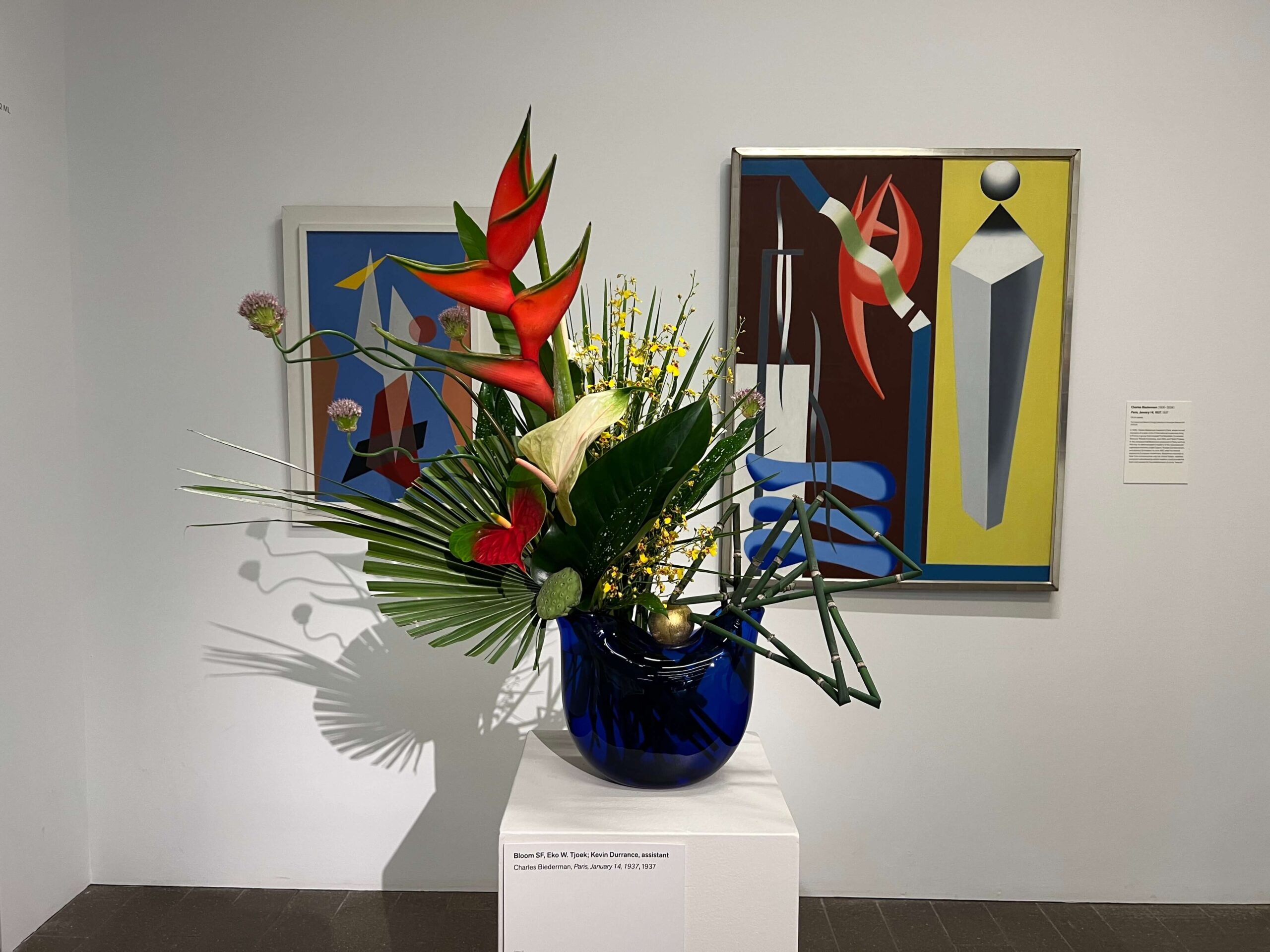
My favorite de Young event is Bouquets to Art, which typically happens each spring. Local florists and designers create elaborate floral arrangements inspired by specific artworks in the museum’s collection. You walk through the galleries and see these incredible flower installations paired with the paintings and sculptures that inspired them. It’s the intersection of two beautiful things, and it draws a massive crowd — for good reason. General museum admission is $15 for adults, with free days on the first Tuesday of each month.
California Academy of Sciences — And Yes, They Do “After Dark”
The California Academy of Sciences is a natural history museum, aquarium, planetarium, and four-story rainforest dome all under one living roof (literally — the roof is covered in native plants). It’s a lot. In the best way. General admission is $44.95 for adults, which is steep, but I think it’s worth it for the sheer variety of what you see. The rainforest exhibit alone — where you walk through a humid, multi-story dome filled with butterflies, birds, and tropical plants — is unlike anything else in the city.
But here’s what I really want you to know about: NightLife at the Academy. Every Thursday evening, the Cal Academy hosts an adults-only event (21+) with cocktails, DJs, and full access to the exhibits. You can drink a cocktail next to the penguin exhibit, wander through the rainforest dome with a glass of wine, and watch a planetarium show — all with a crowd of people who are there to have a good time. It’s genuinely one of the most fun and unique things to do in San Francisco, and it makes for a great date night or a night out with friends. Tickets are around $20-30 and sell out fast, so plan ahead.
Japanese Tea Garden — The Oldest Public Japanese Garden in the U.S.
The Japanese Tea Garden has been here since 1894, making it the oldest public Japanese garden in the United States. It’s a beautifully maintained 5-acre garden with pagodas, stone lanterns, koi ponds, a tea house, and a striking drum bridge that’s become one of the most photographed spots in the park. Admission is $15 for adults, but here’s a pro tip: it’s free for everyone before 10 AM on Monday, Wednesday, and Friday. Get there early and you’ll have the garden practically to yourself.
I’ll be the first to admit this is one of the more “touristy” things in the park, but I don’t care — it’s beautiful, and there’s a reason it’s popular. The tea house serves Japanese green tea and snacks, and sitting there with a cup of tea overlooking the garden is one of those quiet, meditative SF moments that stays with you. (For my general philosophy on “touristy” activities — I think most of them are popular because they’re actually great. No gatekeeping here.)
Bison Paddock — Yes, Real Bison
I’ve written about this before, but it bears repeating: there is a herd of actual American bison living in the western end of Golden Gate Park. They’ve been there since 1892. There is no gift shop. There is no fancy exhibit. It’s just bison, existing in a paddock near the ocean, in one of the most expensive cities in the country. I find this deeply charming and a little absurd, which is a very San Francisco combination.
The Bison Paddock is near the western end of the park, close to the windmills (more on those in a second). It’s a short detour if you’re already heading to Ocean Beach, and it takes all of 10 minutes to stop and appreciate the fact that there are bison in San Francisco. Kids love it. Adults find it unexpectedly delightful. I find it philosophical. We all win.
The Dutch Windmills and Queen Wilhelmina Tulip Garden
At the very western edge of the park, right before you hit Ocean Beach, sit two beautiful Dutch windmills that were built in the early 1900s to pump water for the park’s irrigation. The North Windmill (Murphy Windmill) and the South Windmill (Queen Wilhelmina Windmill) are both lovely, but it’s the Queen Wilhelmina Tulip Garden that really steals the show. If you visit in late February through March, the garden explodes with tulips — rows and rows of them, in every color, set against the backdrop of the windmill. It’s one of the most beautiful sights in the city, and it’s completely free.
Even outside of tulip season, the windmills are worth the walk to the western end of the park. There’s something wonderfully unexpected about finding Dutch windmills at the edge of a Pacific coast city, and on a clear day, you can hear the ocean from where you stand.
What’s the Best-Kept Secret in Golden Gate Park?
Lakehouse Jazz at the Blue Heron Boathouse
Okay, this is the one I’m most excited to tell you about, because it still feels like a secret even though it’s been going on for a while. Lakehouse Jazz happens every Friday and Saturday evening, 7:30 to 9:30 PM, at the Blue Heron Boathouse on Stow Lake (50 Stow Lake Drive East). You show up, the lake is right there, and a revolving lineup of surprise jazz musicians plays in this intimate boathouse setting. The musicians are never announced in advance — it’s always a surprise, and they’re always excellent.
Tickets run about $37 on Eventbrite, and I cannot recommend this enough as a date night. There’s something incredibly romantic about sitting in a boathouse on a lake in the middle of a park, listening to live jazz as the sun sets. It’s also just a great “only in San Francisco” experience — the kind of thing that makes you feel like you’ve unlocked a hidden level of the city. If you’re looking for more date ideas, I have a whole article on that, but honestly, Lakehouse Jazz might be my number one pick.
What About the Big Festivals?
Golden Gate Park hosts two of San Francisco’s biggest annual music festivals, and they’re both worth planning a trip around.
Hardly Strictly Bluegrass — The Best Free Festival You’ve Never Heard Of
Hardly Strictly Bluegrass takes place the first weekend of October in the western end of Golden Gate Park, and it is — this is not an exaggeration — one of the best music festivals in the country. Why? Because it’s completely free. No tickets, no wristbands, just show up. The lineup is always incredible and spans way beyond bluegrass (past years have included acts like Emmylou Harris, Conor Oberst, Mavis Staples, and more).
Here’s what you need to know:
- Bring your own food and drinks — yes, including alcohol (check the website for current rules on what’s allowed)
- Bring blankets and layers — the weather can be unpredictable in October, even during SF’s “second summer”
- Multiple stages spread across the park, so plan your lineup in advance
- Get there early for a good spot — the popular stages fill up fast
- It’s incredibly well-organized and family-friendly
I go every year and it’s become one of my favorite San Francisco traditions. The combination of great music, beautiful weather (usually), and the sheer joy of a free world-class festival makes it feel like the city is throwing a party for itself. And it kind of is — the festival was created by late SF investor Warren Hellman, who funded it so it would always remain free.
Outside Lands — SF’s Big Music Festival
Outside Lands happens in August, and it’s a different beast entirely — this is a ticketed, multi-day music and food festival that draws around 220,000 people over three days. The lineup tends to be massive (headliners have included Radiohead, Kendrick Lamar, and The Strokes), and there’s a heavy food and wine component called “Gastro Magic” and “Wine Lands” that’s very on-brand for San Francisco.
Full disclosure: I haven’t been to Outside Lands yet (I know, I know). What I can tell you is that every single person I know who’s gone says it’s a blast, with the major caveat that it will be cold and foggy. August in San Francisco is peak fog season — average highs are around 64 degrees, and in the park near the ocean, it can feel even colder. Layers are non-negotiable. Think jeans, a warm layer, a windbreaker, and comfortable shoes. Sundresses and flip-flops are a recipe for a miserable time. (This is a thing nobody tells you about SF — I’ve got a whole article on those.)
Where Should I Eat Near Golden Gate Park?
You know I can’t write a guide without talking about food. One of the best things about Golden Gate Park is that it’s surrounded by excellent neighborhoods for eating — the Inner Sunset to the south, the Richmond to the north, and the Haight-Ashbury to the east. Here are my go-to spots. (For a much deeper dive, check out my guide to the best restaurants in SF.)
Near the Eastern End of the Park (Inner Sunset / Haight Side)
- Tartine Inner Sunset — If you know anything about San Francisco bakeries, you know Tartine. The country loaf is legendary, the morning buns are perfection, and the croissants are the kind of thing that ruins all other croissants for you. There’s often a line, and every person in it would tell you it’s worth the wait.
- Arizmendi Bakery — A worker-owned cooperative that serves a daily rotating vegetarian pizza (always excellent) and some of the best scones in the city. I have a particular weakness for their sourdough cinnamon rolls. Arizmendi represents everything I love about SF’s food culture — community-minded, delicious, unpretentious.
- Arguello Market — This unassuming little market on Arguello Boulevard makes incredible sandwiches, and their Dutch crunch is the real deal. If you don’t know about Dutch crunch bread, it’s a San Francisco thing — a crunchy, tiger-striped roll that shatters when you bite into it. Get a turkey and avocado on Dutch crunch and bring it into the park for a picnic. You’re welcome.
- Flywheel Coffee — A great neighborhood coffee shop for a pre-park caffeine boost. (More coffee recs in my best coffee shops guide.)
Near the Western End of the Park (Ocean Beach Side)
If you walk through the park all the way to the western end — past the bison, past the windmills — you’ll pop out at Ocean Beach. And lucky you, because some of the best food in the Outer Sunset is right there waiting.
- Andytown Coffee Roasters — Order the “Snowy Plover” — an espresso drink with simple syrup and whipped cream soda that sounds weird and tastes incredible. Andytown is one of my favorite coffee spots in the whole city, and their Lawton Street location is right near the park.
- Devil’s Teeth Baking Company — Their breakfast sandwich has achieved legendary status in SF, and the line on weekends proves it. It’s massive, it’s messy, and it’s one of those things that single-handedly justifies walking across an entire park.
Pro tip: grab food from any of these spots, bring it into the park, and find a bench or a patch of grass. Picnicking in Golden Gate Park is one of the most perfect free activities in San Francisco.
How Do I Get to Golden Gate Park?
This is important, because how you get there will shape your whole experience.
By Bike or on Foot
This is my preferred way to visit, and I genuinely think it’s the best. The park is designed for it — especially now that JFK Promenade is permanently car-free. You can rent bikes from multiple shops near the Haight-Ashbury entrance, or use Bay Wheels (the city’s bike share system) to grab an e-bike and cruise. The park is relatively flat compared to the rest of SF, so even casual cyclists will be comfortable. If you’re staying in the Inner Sunset, Haight, or Richmond, you can walk right in.
By Public Transit
- N-Judah Muni line — Runs along the southern edge of the park. Get off at any stop between Carl & Cole and Judah & 19th Ave.
- 5-Fulton bus — Runs along the northern edge of the park through the Richmond District.
- 7-Haight/Noriega bus — Stops right at the eastern entrance near the Haight.
- 44-O’Shaughnessy bus — Runs through the park, connecting the eastern and western ends.
By Car (If You Must)
I’ll be real with you: parking in Golden Gate Park is hit or miss. On weekends and sunny days, it can be a full-on battle. Your best options:
- Underground garage — There’s a parking garage beneath the de Young Museum and California Academy of Sciences (Music Concourse Garage). It’s the most reliable option, but it fills up, especially on weekends. Rates are around $6-7/hour.
- Street parking — Available along Fulton Street (north side), Lincoln Way (south side), and some interior park roads. Free but competitive.
- My honest recommendation: Take a rideshare, bike, or use transit. It’ll save you the stress and you’ll enjoy the park more when you’re not thinking about where you parked. Rideshare drop-off at the Music Concourse area puts you right in the center of all the major attractions.
What’s the Best Way to Spend a Day in Golden Gate Park?
If I were planning a full day in the park for a visitor, here’s roughly how I’d lay it out:
- Morning: Grab coffee and a pastry from Arizmendi or Flywheel, enter from the eastern end, and walk or bike the JFK Promenade
- Mid-morning: Visit the Botanical Garden (spend at least an hour — don’t miss the Redwood Grove)
- Lunch: Pick up a Dutch crunch sandwich from Arguello Market and picnic on the grass near the Music Concourse
- Afternoon: Choose your own adventure — the de Young Museum, Cal Academy of Sciences, Conservatory of Flowers, or Japanese Tea Garden (you probably can’t do all of them in one day, so pick the one or two that excite you most)
- Late afternoon: Continue west through the park to the Bison Paddock and the Dutch Windmills
- Sunset: Pop out at Ocean Beach, grab an Andytown Snowy Plover or a Devil’s Teeth breakfast sandwich, and watch the sunset over the Pacific
That’s a full, wonderful, very San Francisco day. And if it’s a Friday or Saturday evening? End it with Lakehouse Jazz at the Blue Heron Boathouse. You’ll thank me.
What Should I Know Before Visiting Golden Gate Park?
A few practical things that’ll make your visit smoother:
- Dress in layers. The western end of the park is significantly cooler and windier than the eastern end, because it’s closer to the ocean. I’ve started a park visit in a t-shirt and ended it wishing I had a jacket. My guide on what to wear in SF has the full breakdown, but the short version is: always bring a layer.
- The park is big. Like, really big. It’s 3 miles from end to end. Plan accordingly — if you want to see both the eastern attractions (museums, gardens) and the western sights (bison, windmills, Ocean Beach), biking is the way to go.
- Weekdays are less crowded. If you have flexibility, visit the museums and gardens on a weekday to avoid weekend crowds. The Botanical Garden on a Tuesday morning is a completely different (more peaceful) experience than on a Saturday afternoon.
- Check for free days. The de Young Museum is free on the first Tuesday of every month. The Botanical Garden is always free for SF residents. The Japanese Tea Garden is free before 10 AM on Monday, Wednesday, and Friday. A little planning goes a long way.
- Safety is not an issue. Golden Gate Park is one of the safest and most family-friendly areas in the city. Like any urban park, use common sense — stick to well-traveled paths, be aware of your surroundings — but I’ve never felt unsafe here, and I visit all the time. For more on this topic, I have a detailed take on whether SF is safe.
- Dogs are everywhere. This is San Francisco, after all — the city has more dogs than children. Most of the park requires leashes, but you’ll see plenty of good dogs enjoying the promenade and the trails.
Golden Gate Park by the Numbers
Because I know my fellow data nerds appreciate this kind of thing:
- Total area: 1,017 acres (20% larger than Central Park’s 843 acres)
- Length: 3 miles from east to west, 0.5 miles wide
- Annual visitors: Approximately 24 million
- Year established: 1870
- Number of plant species in the Botanical Garden: Over 9,000
- JFK Promenade length: 1.5 miles, permanently car-free since 2022
- Bison in the paddock: A small herd, maintained since 1892
- Lakes: 11, including Stow Lake, Spreckels Lake, and the Chain of Lakes
- Hardly Strictly Bluegrass attendance: Roughly 500,000-750,000 people over three days (all free)
Frequently Asked Questions
Is Golden Gate Park free to visit?
Yes, the park itself is completely free and open to the public 24 hours a day. Individual attractions within the park — like the de Young Museum ($15), California Academy of Sciences ($44.95), Conservatory of Flowers ($12), and Japanese Tea Garden ($15) — charge admission, but many offer free days. The Botanical Garden is always free for SF residents. The JFK Promenade, Bison Paddock, windmills, Stow Lake, and all the trails and green spaces are free for everyone, all the time.
How long does it take to walk through Golden Gate Park?
The park is 3 miles from end to end, so a straight walk from the Haight-Ashbury entrance to Ocean Beach takes about an hour at a moderate pace. But realistically, if you’re stopping to visit attractions, explore gardens, and take photos, plan for at least half a day. A full day is ideal if you want to see the museums and make it to the western end. I recommend biking if you want to cover a lot of ground — the car-free JFK Promenade makes it easy and enjoyable.
What is the best time of year to visit Golden Gate Park?
The park is beautiful year-round, but each season has its highlights. Spring (March-April) brings the tulip bloom at the Queen Wilhelmina Garden and cherry blossoms in the Japanese Tea Garden. September is warm and sunny with Flower Piano at the Botanical Garden. October has Hardly Strictly Bluegrass. Even in winter, the magnolias bloom in January and the Lightscape exhibit illuminates the Botanical Garden through the holidays. For the warmest, sunniest weather, September and October are your best bet — that’s SF’s true summer.
Is Golden Gate Park safe?
Yes. Golden Gate Park is one of the most popular and well-visited parks in the country, with roughly 24 million visitors annually. The main areas — the Music Concourse, the museums, the JFK Promenade, the Botanical Garden — are busy and safe during daylight hours. I visit 1-2 times per month and have never had a safety concern. Like any large urban park, I’d recommend sticking to well-traveled areas after dark and keeping an eye on your belongings. San Francisco’s overall crime rate is at a 23-year low as of 2025. For more context, read my full guide on whether San Francisco is safe.
Can you bike in Golden Gate Park?
Absolutely, and I’d argue it’s the best way to experience the park. The JFK Promenade — a 1.5-mile car-free road running through the heart of the park — is perfect for cycling. You can rent bikes from shops near the Haight-Ashbury entrance or use Bay Wheels (SF’s bike share program) for an e-bike rental. The terrain is mostly flat, which is a rarity in famously hilly San Francisco. Biking lets you cover the full 3-mile length of the park without exhausting yourself, and you can easily stop at attractions along the way.